
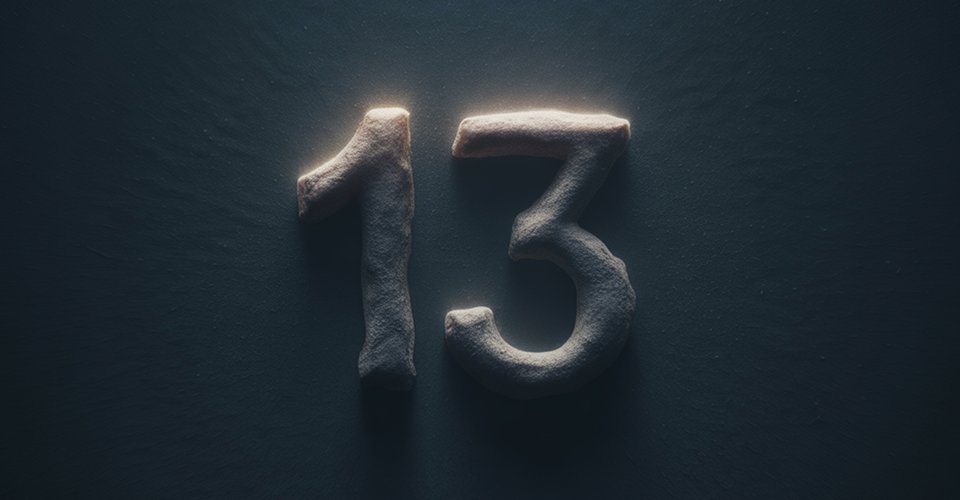
Thirteen. Baker’s dozen. The one that makes people check twice, not because anything bad happens at thirteen, but because the number has earned its reputation through centuries of folk superstition—the seat left empty, the floor skipped in the lift, the hesitation before saying it plainly. The race uses that energy directly. Not a horror series. Not a warning. Just a distance, a number, and a window for those who don’t find the count worth worrying about.
This virtual running competition pairs with 1945 in May to form the two short classics in Season 262. One appears in May, one in June. Both ask for one run. Both count in full.
Classic format in June
The mechanic is identical to 1945: one submission, the target distance, verified within the window. No accumulation, no second attempts. The live phase runs UTC from 00:00 on 1 June through 23:59 on 15 June.
One verified 13 km run inside that span is the race. Everything else—when to go, what pace to carry—is left to the runner.
The Classic format concentrates all risk into a single outing. In an online race where other formats spread load across days or weeks, this one does not. One clean run clears it. Anything less than a verified submission does not appear in the standings.
Where it lands in June
When Thirteen opens on 1 June, .execution has just crossed its 5 June close—the Pace Ladder has been running since late April. Mundial starts on 1 June alongside Thirteen. Rembrandt opens 8 June, five days before Thirteen’s window closes on 15 June. Solstice and Nairobi are still live.
Thirteen is the shortest fixed target of the June block. That makes it easy to schedule around other commitments—13 km fits inside a shorter training day without displacing much. The entry cost is low; the precision required is not zero.
The distance is not the concern. The concern is executing cleanly inside a busy fortnight when fatigue from April and May has been accumulating and the June calendar is already stacked.
Fifteen days
Fifteen days creates room to choose the moment. But the window has a shape: the first week sits close to .execution’s close, when pace effort may still be in the legs; the second week arrives inside the full June block, when Rembrandt and Mundial are both active.
Neither half is obviously cleaner. An early run in the window clears the task while it is fresh. A later run allows more recovery from the April–May block but lands inside a denser period.
Entering early removes a variable. Leaving it late adds one.
Verification
A clean run that does not survive verification does not count. The submission must be logged and published to this virtual competition within the window. Proof and pace are both required—one without the other produces no result.
That layer is not unusual in the season, but in the Classic format it has more weight than in a multirun. In a multirun, a rejected session affects the total but does not end the race. Here, a rejected single submission is the race.
The season’s second classic
1945 ran in May. Thirteen runs in June. Both are short, both ask for one run, both count in full against anyone who does not enter.
A result in both completes the short-classic pair of the season—two distances, two months, one submission each. A result in one without the other is still a result. The record shows both entries or the gap where one was not made.
After 15 June
The live phase closes at 23:59 UTC on 15 June. Results move through verification; provisional standings can shift until Results out.
After that, the table locks. The number thirteen, like the baker’s dozen, either landed or it didn’t.