
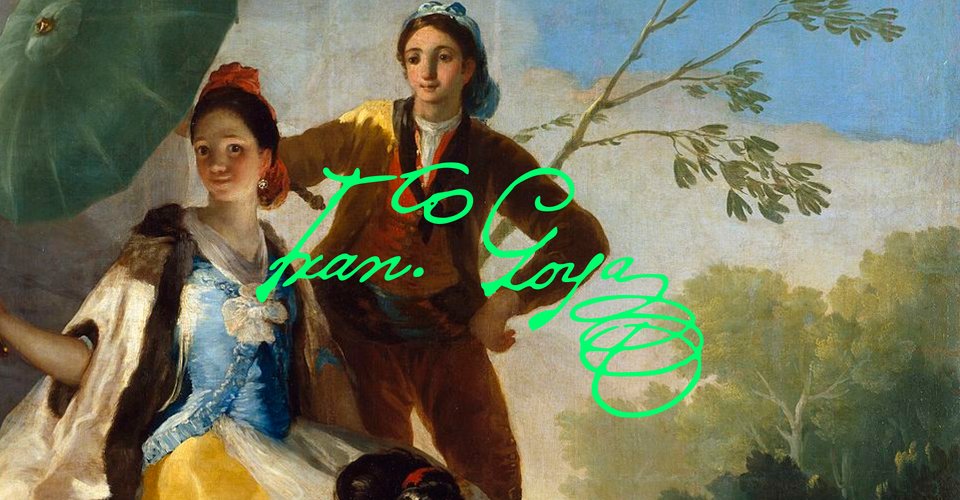
Goya belongs to the Art series—the line of virtual running races named for painters that runs across the season from April through June. The name is not coincidental. Francisco Goya, 1746–1828, spent the first half of his career producing portraits and tapestry cartoons for the Spanish court; the second half produced something different: the Black Paintings, Los Caprichos, The Third of May 1808. Work that moved away from commission toward its own interior logic.
This online competition does not require knowledge of that trajectory. It takes the name and the atmosphere—the sense of something that changed direction mid-career—and places it in the middle of May.
A multirun in two weeks
Goya is a 25-kilometre virtual running challenge with a fixed two-week window: 8 to 22 May, UTC. Sessions accumulate toward the total; the best total time, once verified, determines the standing.
Two weeks is shorter than a full-month multirun. The room to adapt—to make up for a bad session, to redistribute a planned effort—is tighter than in April’s longer races. The start of the window matters more here.
May already in motion
When the Goya window opens, the season is already running. Streets is live from 1 May. 1945 is open for the first ten days. .execution, which started 25 April, still has weeks left.
Twenty-five kilometres sits inside that context. The distance is manageable for most entrants who have reached this point; the question is what the rest of May leaves available. A week where .execution demands attention and Streets is accumulating is a week with less to give this virtual race.
Structure within the window
The multirun format leaves session design open. The twenty-five kilometres can move through many small contributions or fewer longer runs. Both approaches work mechanically; each creates different exposure.
A granular approach lowers the risk of a disrupted day causing a material setback. A chunked approach accepts more volatility in exchange for fewer required sessions. Over two weeks, neither guarantee completes itself.
When to commit
The window is fourteen days. That suggests room to delay. In practice, the back half of May—after the fifteenth or sixteenth—arrives with less recovery and more concurrent demand. Goya’s live phase ends 22 May, and Solstice opens two days later.
An early start on the distance is harder to justify when other commitments are heavy. A late start is harder to finish cleanly when fatigue has already accumulated. The window counts down the same way for everyone in this online running competition.
Verification
Valid distance is published distance that survives verification. The total that appears in the standings is not just what was run—it is what was logged, submitted, and cleared.
That administrative layer sits beneath the physical work throughout the window. A missed submission or a verification gap changes the total the same way a missed run does.
After the window
22 May closes the live phase. Official standings follow after review; provisional positions may shift while verification clears. The result locks at Results out.
What carries
A completed 25 km in this Art series virtual race is the middle entry in the Velázquez–Goya–Rembrandt thread. It stands alone as a finished competition; it also marks whether the Art line is being carried across the season or left at its edges.