The question “what’s the best running app?” is almost the wrong question. Every major platform gets called “the best” in some context. Strava is the best for community. Garmin Connect is the best if you have a Garmin watch. TrainingPeaks is the best for coached training. Each claim is true and incomplete at the same time — they’re describing different products built for different purposes.
The better question is: what job are you trying to fill? And are you trying to fill one job or several?
This guide covers every major running platform — what each one is actually built for, who benefits from it, and where it stops. Not to pick a winner, but to map the landscape clearly. Because most serious runners end up using two or three platforms for good reasons, not because they couldn’t decide.
The short version:
- There is no single platform that does everything well — social tracking, training analytics, coaching, competitive racing, and indoor training are genuinely different products
- Most engaged runners use a combination: a device ecosystem app (Garmin, Coros, Apple, Polar) plus a social layer (Strava) plus one competitive or coaching tool
- URX provides the competitive layer — verified outdoor race results and age-group standings — that none of the tracking platforms include
- The stacks are complementary, not competing: adding URX doesn’t require replacing anything
The Five Jobs a Running App Can Do
Before comparing platforms, it helps to name the five distinct things running apps are asked to do. Most platforms do one or two of these well; none does all five at the same level.
1. Activity logging and GPS tracking — record your runs, map your routes, store your history. Nearly every platform does this; they vary in accuracy, data depth, and how accessible the history is.
2. Social layer — share runs, get reactions, follow other runners, compare times. This is Strava’s primary job. Most other platforms include a lighter version of it; none matches Strava’s network size.
3. Training analytics and load management — measure fitness over time, track HRV, manage training load, predict performance. This is Garmin Connect, Coros EvoLab, Polar Flow, and TrainingPeaks. Different levels of sophistication, but the intent is the same: turn raw GPS data into coaching signal.
4. Coaching and structured training — guided workouts, training plans, adaptive programming. Nike Run Club, Runkeeper, and TrainingPeaks all do this; they differ in how expert and adaptive the coaching is.
5. Competitive racing — structured competition against other runners, with verified results, standings, and stakes. This is the one job no tracking platform fully delivers. Strava’s segments come closest; they reward speed but don’t produce a verified result or season standing. URX is built specifically for this job.
Almost every question about running apps can be answered by mapping a platform to these five jobs and seeing whether the jobs on offer match the ones you need.
The Platforms
Strava — The Social Graph of Running
Strava is where the running community lives. With over 180 million users globally, it has the largest active runner network of any platform — your running friends are almost certainly already there. The core product is the activity feed and the segment system: GPS-defined stretches of road where your time is ranked against everyone who has run that segment. Segment KOMs and QOMs are a genuine form of competition, and the social layer that surrounds them — kudos, comments, clubs — makes solo running feel public in a way that most platforms can’t replicate.
Strava’s limitation is structural: it gestures at competition without delivering formal competitive infrastructure. There are no verified race results, no age-group standings, no season arcs. The comparison is lateral — you against anyone who ran the same segment — rather than structured. For runners who want the next level of competitive accountability, that gap is real and consistent.
Full breakdown: Strava and URX
Garmin Connect — The Data-First Ecosystem
Garmin Connect is a platform designed for Garmin device owners, and it’s one of the most comprehensive training analytics ecosystems in consumer running. Body Battery (a readiness score based on HRV and sleep), Training Status (whether your recent load is productive, peaking, or overreaching), VO2max trend, and Training Readiness — Garmin has built more sophisticated physiological monitoring into a consumer device than almost any competitor. If you own a Garmin watch, Connect is where all of that data lives and where it’s most legible.
The platform doesn’t compete beyond its own device ecosystem. It has minimal social features, no public competitive layer, and no external race structure. What it does — turning sensor data into actionable training guidance — it does better than anyone at the consumer level.
Full breakdown: Garmin Connect and URX
Nike Run Club — Coaching and Accessibility
Nike Run Club is the most accessible major running app, and that accessibility is a deliberate design choice. The audio-guided runs — featuring coaches and occasionally celebrities — are the feature that genuinely distinguishes it. NRC can make a 45-minute easy run feel guided and engaging without requiring any prior knowledge of running structure. For new runners, this lowers the barrier to entry considerably.
The social features are intentionally contained: leaderboards exist only within your friends, preventing the overwhelming comparison that Strava’s open feed can produce. The trade-off is ceiling: experienced runners often find NRC insufficient for tracking the data they need or competing at the level they want. It’s an exceptional entry ramp that becomes a launching pad to other platforms over time.
Full breakdown: Nike Run Club and URX
adidas Running — Gamification Without Competitive Stakes
adidas Running (formerly Runtastic) has built one of the more polished gamification loops in consumer fitness — the adiClub points system rewards activity and purchases with status tiers and benefits. For runners embedded in the adidas ecosystem, this creates genuine retention. The app is competent at GPS tracking, routes, and social sharing.
The honest limitation: adidas Running’s competitive features are shallow by design. The platform prioritizes brand engagement over athletic competition. It’s a strong choice for casual runners who like the motivational scaffolding of points and streaks; it’s not the right tool for runners who want their results to mean something outside the app.
Full breakdown: adidas Running and URX
Coros — Performance Analytics for Serious Athletes
Coros has become a serious challenger to Garmin among performance-oriented runners, with devices at notably lower price points. The EvoLab system — Coros’s proprietary training analytics — offers training load management, acute and chronic load tracking, and a Race Predictor that estimates potential race times based on your current fitness. Coros devices are known for exceptional battery life, reliable GPS, and a clean interface that doesn’t overwhelm with data.
Like Garmin, Coros is a closed device ecosystem: the analytics live on your Coros watch and in the app, and there’s no external competitive layer. EvoLab’s Race Predictor is a hypothesis, not a result — it tells you what your fitness suggests you’re capable of, not how you rank against actual runners who ran the same race.
Suunto — Trail, Adventure, and the Long Game
Suunto has a distinct identity among running watch brands: it is built for trail running, ultra distances, and mountain environments. The mapping and navigation features are among the best in the category — extensive pre-loaded maps, breadcrumb navigation, large-file GPX import. Suunto Race and Vertical are built for athletes who need their watch to guide them through remote terrain that has no cellular coverage.
For road runners, Suunto is often excessive: the features you pay for are features you don’t use on roads and tracks. For trail and ultra runners, it’s a natural fit. Suunto has training load analytics and community features, but its identity is fundamentally outdoor adventure rather than performance science or social fitness.
Full breakdown: Suunto and URX
Apple Fitness / Apple Watch — The Health Platform That Runs
Apple Watch is worn by hundreds of millions of people, and the majority of them aren’t runners — they’re tracking general health: steps, activity rings, heart rate, sleep. The Activity Rings system (Move, Exercise, Stand) is among the most effective consumer behavior-change interfaces ever built. It works for general fitness motivation in a way that running-specific apps often don’t.
For runners specifically, Apple Watch Series 10 and Ultra 3 bring dual-frequency GPS and VO2max estimation into a premium package. The platform does GPS tracking, workout history, and heart rate well. What it doesn’t have is a running-specific social layer, training analytics depth, or any competitive running infrastructure. It is the world’s best general health device that also works well for running — rather than a running-first product.
Full breakdown: Apple Fitness, Apple Watch, and URX
Polar Flow — The Physiology Platform
Polar has been measuring athletes’ physiology longer than any other consumer brand — the first Polar heart rate monitor appeared in 1982. The modern platform reflects that heritage: Nightly Recharge (overnight autonomic recovery), Orthostatic Test (cardiovascular readiness), Training Load Pro, and the Polar Running Program. These are features designed for runners who treat physiology as a core variable in their training, not a secondary metric.
The platform’s limitation is what you might call the “recovery trap”: it measures readiness very well but provides no competitive context for the readiness it measures. Polar will tell you you’re at 94% on a Tuesday morning. What you do with that readiness on Saturday is a question Polar doesn’t answer.
Full breakdown: Polar Flow and URX
MapMyRun — The Route Platform
MapMyRun is the quietest brand in this list, and the one with the clearest use case: route creation. The web-based route planner is among the best in consumer running — click-to-create routes, elevation preview, distance calculation, save and share. For runners who plan their runs geographically rather than just pressing start and running, MapMyRun fills a specific gap that most other apps ignore.
Owned by Under Armour, the app integrates with UA HOVR shoe mileage tracking. Beyond routing, the competitive and social features are minimal. It’s a cartographic tool for running, not a training or community platform. That narrowness is a strength if routing is what you need; it’s a ceiling if you need more.
Full breakdown: MapMyRun and URX
Runkeeper — The Habit App
Runkeeper, now owned by ASICS, was many runners’ first serious running app. Its design prioritizes consistency over performance: guided training plans, regular prompts, milestone celebrations. For someone building a running habit from scratch, Runkeeper’s scaffolding works. The interface is approachable, the training plans are clear, and the coaching tones are low-pressure.
The honest description: Runkeeper is a habit-formation tool that most runners outgrow. The ceiling is real — experienced runners find the analytics thin, the competitive features absent, and the social layer quiet. That’s not a failure of design; it’s a reflection of what it was built to do. Getting you out the door consistently for the first year is a genuine and valuable job.
Full breakdown: Runkeeper and URX
TrainingPeaks — Coaching Infrastructure
TrainingPeaks is categorically different from every other platform on this list. It isn’t primarily for individual self-coaching — it’s for the coach-athlete relationship. The platform’s data model is built around TSS (Training Stress Score), CTL (Chronic Training Load / Fitness), ATL (Acute Training Load / Fatigue), and TSB (Training Stress Balance / Form) — the Performance Management Chart framework used by professional endurance coaches worldwide.
If you have a coach or are self-coaching seriously, TrainingPeaks is arguably the highest-signal training data environment available. If you don’t have a coach, the platform is likely over-engineered for your current use case. The athlete premium tier (around $19/month) unlocks the analytics that justify the subscription; without them, it’s a calendar.
Full breakdown: TrainingPeaks and URX
Zwift Running — Indoor and the Winter Calendar
Zwift is the most categorically different platform in this comparison: it’s a gamified indoor training and virtual racing environment, not a GPS tracking app. Your treadmill pace drives an avatar through a 3D virtual world. Group runs, virtual races, interval workouts — all of it happens indoors, for free, with no subscription required for running features.
Zwift doesn’t compete with outdoor running platforms because it serves a different physical environment. The interesting case for Zwift is seasonal: runners in northern climates lose 3–5 months of comfortable outdoor training in winter. Zwift fills that window competitively. URX fills the outdoor season. The combination produces a twelve-month calendar with no dead periods.
Full breakdown: Zwift Running and URX
Common Stacks
Most experienced runners don’t use a single platform. Here are the combinations that appear most often, and why:
The Garmin or Coros runner: device app (Garmin Connect or Coros) for training analytics + Strava for social logging and segment racing. This covers jobs 1, 2, and 3. Add URX for job 5 (verified competitive racing) and the stack is complete.
The Apple Watch runner: Apple Health for daily health and workout recording + Strava for community. Apple’s training analytics are lighter than Garmin’s, so some Apple runners add TrainingPeaks for PMC data. Add URX for the competitive layer.
The trail runner: Suunto or Garmin for device analytics and navigation + Strava for community + URX for road season competition when it happens.
The coached athlete: TrainingPeaks as the data backbone, coordinated with their coach + Strava for the social layer + the device ecosystem app for daily recording. URX functions as the race verification system within the existing stack.
The winter trainer: Zwift through November–March + any outdoor platform (Strava, Garmin, Coros) through April–October + URX for the outdoor race season. Year-round competitive calendar, no seasonal gap.
Where URX Fits
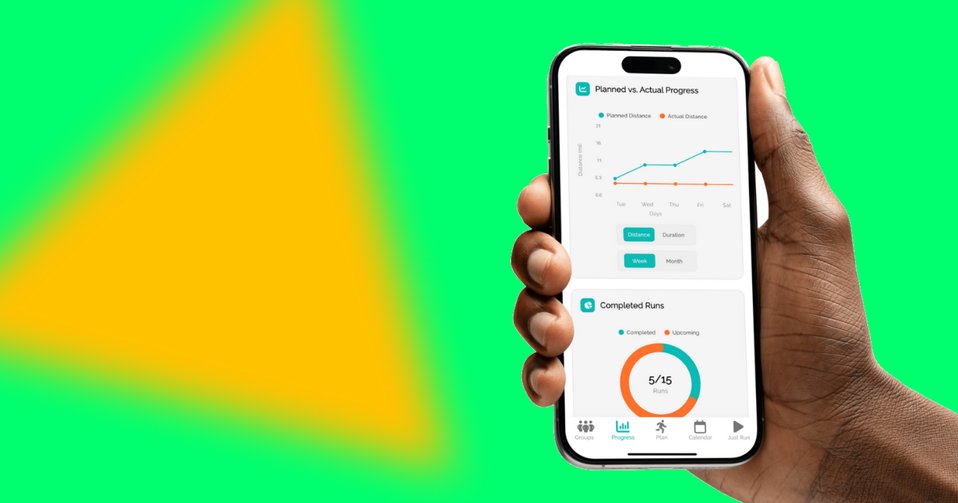
URX is a competitive racing platform. It provides the one job no tracking app fully delivers: structured outdoor competition with verified results, age-group standings, and season arcs.
The submission model is intentional: when you complete a URX race, you submit a screenshot of your GPS result. This works with every tracking platform — Garmin, Strava, Coros, Apple Watch, Polar, Suunto, MapMyRun, Runkeeper — because no sync integration is needed and none would be appropriate. A platform that synced automatically only from Garmin would exclude every runner on a Coros, Polar, or Apple Watch. The manual submission keeps the competitive field universal: your platform is irrelevant to your eligibility. The screenshot is the record.
URX doesn’t replace your training app, your social platform, or your device ecosystem. It adds the thing that makes all the training you’re already logging mean something competitively — an external result that stands independent of whichever app you use to train.
Frequently Asked Questions
Do I need to switch apps to use URX? No. URX works alongside any tracking platform. You continue using Garmin, Strava, Coros, Nike Run Club, Apple Watch, or whatever you currently use. When a URX race window opens, you run outdoors with your normal setup and submit a screenshot of your GPS activity.
Which tracking app is actually the best? The question doesn’t have a single answer. Garmin Connect is best for Garmin device analytics. Strava is best for the social layer. TrainingPeaks is best for coached training. Nike Run Club is best for beginners who want audio guidance. Each platform is best at its primary job. The real question is which jobs matter to you.
Can I use multiple apps at once? Yes, and most experienced runners do. The most common combination is a device ecosystem app (Garmin or Coros) for analytics, Strava for community and segment racing, and URX for competitive race seasons. These roles don’t overlap.
Is Strava worth it if I already use Garmin Connect? For most runners, yes. Garmin Connect handles training analytics well; Strava handles the social and community layer that Garmin Connect doesn’t prioritize. They serve different jobs, and most Garmin users who also use Strava are deliberately using both for what each does well.
What if I use a platform that isn’t listed here? URX accepts results from any GPS tracking app. The submission is a screenshot — your platform is never a barrier to participation.